
August 7, 2026
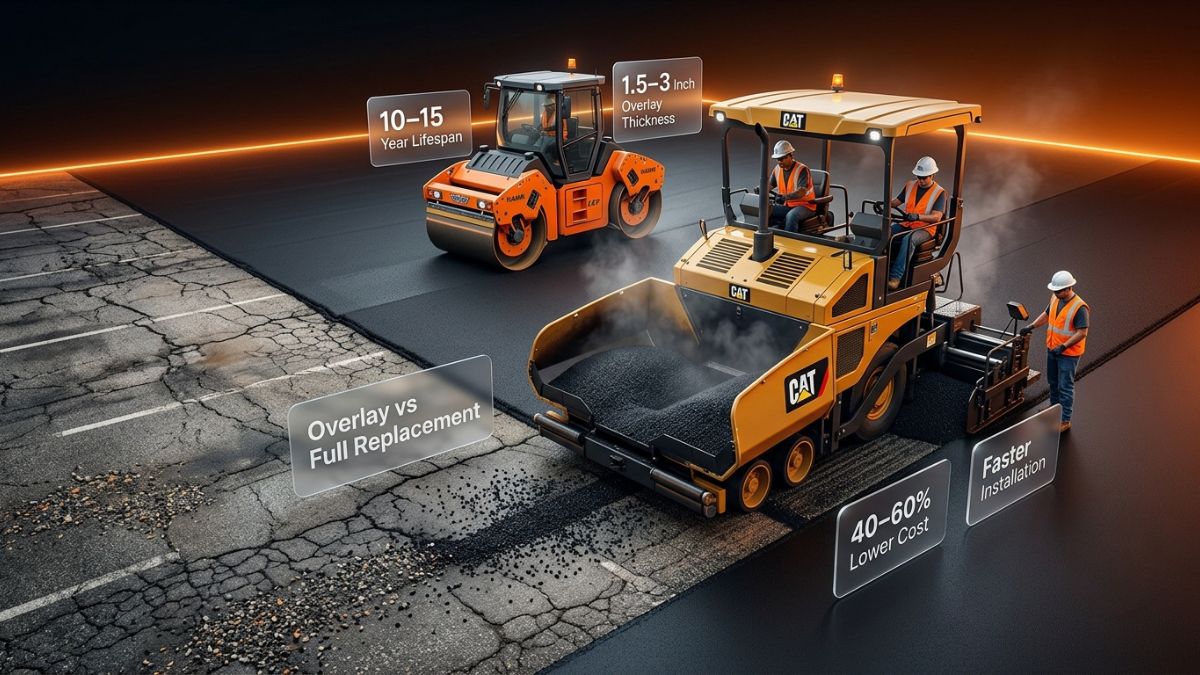
An asphalt overlay is a new layer of hot mix asphalt placed over existing pavement to restore its surface without full removal. Property owners in Central Louisiana use overlays to extend pavement life by 8 to 15 years at roughly half the cost of full replacement, but only when the base underneath is still sound.
Cracked, faded asphalt does not always mean you need a full tear-out. Many property owners assume replacement is their only option once a parking lot starts showing wear. That assumption often costs thousands of dollars more than necessary.
Precision Blacktopping LLC has assessed hundreds of driveways and commercial lots across Pineville and Central Louisiana. Most of them qualified for a simpler fix: an asphalt overlay placed directly over the existing surface.
This guide explains how overlays work, whether your pavement qualifies, what the process involves, and what it costs. By the end, you will know exactly which questions to ask before hiring anyone.
An asphalt overlay adds a fresh layer of hot mix asphalt on top of an existing, structurally sound pavement surface. Contractors call this process resurfacing in some regions, but the technique is the same everywhere.
Overlay and resurfacing describe the same repair method. Both terms mean applying new asphalt on top of an existing surface rather than removing it first. Some contractors use “resurfacing” for driveways and “overlay” for commercial lots. However, the materials, equipment, and steps stay identical regardless of the label used.
You may also hear “asphalt overlay” mixed up with “seal coating.” Seal coating adds a thin protective film, while overlay adds structural thickness. These are different repairs for different problems.
Most overlays in Central Louisiana range from 1.5 to 3 inches thick. Thickness depends on how much traffic the pavement handles and how worn the current surface is. A residential driveway typically needs 1.5 to 2 inches. Commercial lots with truck traffic often require closer to 3 inches for lasting durability. Your contractor should measure existing pavement depth before recommending a thickness. Guessing at this step often leads to premature cracking.
Overlay works best when surface damage exists, but the base below remains intact. Fading, minor cracking, and rutting are common candidates for this repair. For example, a Pineville retail lot with sun-faded, cracked surface asphalt but no water pooling issues is a strong overlay candidate. The base holds weight fine; only the top layer needs renewal.
This makes overlay attractive for owners who want better appearance and performance without the cost of full removal. The next section compares overlay against your other main options.
Each pavement repair method suits a different level of damage. The table below summarizes the key differences.
For a deeper look at lighter maintenance options, see our seal coating and crack sealing guide. The next section shows how to tell which category your pavement falls into.
Not every worn parking lot or driveway qualifies for an overlay. The base underneath the surface determines whether this repair will hold up.
A qualified contractor inspects three layers before recommending an overlay: the surface, the base, and the sub-base. Each layer plays a different structural role. The base distributes weight from vehicles down to the soil. If the base has shifted or washed out, a new surface layer will crack again quickly. Drainage matters just as much. Standing water that seeps into the base weakens it over time, even if the surface looks fine today.
Surface-level damage stays in the top layer of asphalt. This includes fading, minor cracking, and light rutting from tire wear. Structural damage reaches into the base or sub-base. Signs include large potholes, sunken sections, and cracking that spreads in a connected pattern. Structural damage cannot be fixed with an overlay. Placing new asphalt over a failed base only delays the same problem from resurfacing within a year or two.
Several signs point toward overlay as the right fit for your pavement. Look for these before requesting a quote:
If your pavement matches most of these signs, overlay likely offers the best value. According to the American Society of Civil Engineers, timely resurfacing before base failure significantly extends total pavement service life (Source: ASCE, 2023).
Some conditions rule out overlay entirely. Alligator cracking, a web-like pattern of interconnected cracks, signals base failure underneath. Large potholes deeper than the surface layer also indicate the base has broken down. An overlay placed over these areas fails within months. Standing water that pools in low spots after rain often means the base has settled unevenly. This requires excavation and rebuilding, not a surface layer.
If your lot shows any of these signs, full replacement is the more honest recommendation. The next section walks through what the overlay process actually involves once your pavement qualifies.
A proper overlay follows a specific sequence. Skipping steps is the most common cause of early overlay failure.
The process starts with a full inspection of the existing surface and base. Your contractor checks for the disqualifying issues covered above. Milling comes next in many projects. A milling machine grinds down the top layer of old asphalt to create a clean, level surface for bonding.
Milling also prevents the new layer from raising curb heights, drainage grates, or door thresholds too much. Skipping milling on a heavily worn surface can create bonding and height problems later.
Before the new asphalt goes down, crews patch any isolated cracks or small depressions. This step keeps small issues from telegraphing through the new surface. A tack coat, a thin layer of liquid asphalt, gets sprayed across the prepared surface. This coat bonds the old and new asphalt layers together. Without a proper tack coat, the new overlay can slip or separate from the base layer under traffic. This is one of the most skipped steps by lower-quality crews.
Contractors select a hot mix asphalt formula based on expected traffic and climate conditions. Commercial lots need a denser mix than light residential driveways. The paver spreads the hot mix evenly across the tacked surface. Crew members monitor thickness and temperature throughout installation to keep the mix workable. Temperature control matters more in Louisiana's humid climate. Asphalt that cools too fast before compaction does not bond correctly.
Rollers compact the fresh asphalt while it remains hot, pressing out air pockets and increasing density. Proper compaction is the single biggest factor in overlay longevity. A final inspection checks for even surface grade, proper drainage flow, and consistent compaction across the entire area. Crews also verify that markings or striping areas are ready for the next step.
This full sequence, done correctly, is what separates an overlay that lasts 12 years from one that fails in three. Next, we cover the specific materials and equipment behind this process.
Overlay quality depends heavily on the materials and machines used during installation. Cutting corners here shows up within the first year.
Hot mix asphalt combines aggregate, sand, and asphalt binder heated to roughly 300 degrees Fahrenheit before placement, a standard documented by the National Asphalt Pavement Association. The exact mix design changes based on traffic load and regional climate.
Tack coat material is typically an emulsified asphalt product sprayed at a controlled rate. Too little tack coat weakens the bond; too much can cause the new layer to slide.
Milling machines use rotating drums with carbide teeth to remove old asphalt to a precise depth. This creates a clean, textured surface for bonding. Pavers spread the new hot mix asphalt at a consistent thickness and grade. Modern pavers use sensors to maintain even depth across large areas.
Rollers, both vibratory and static, compact the asphalt immediately after paving while it stays hot enough to bond properly. This step directly affects how long your overlay will last.
Two overlays can look identical on installation day and perform completely differently five years later. The difference usually comes down to a few technical factors.
Strong bonding between the old and new layers prevents delamination, where the top layer peels away from the base. Proper tack coat application and clean milling both support this bond.
Compaction density measures how tightly the asphalt particles pack together. Higher density means fewer air voids, which means less water infiltration and slower oxidation over time.
The asphalt mix design should match expected traffic. A mix built for light driveway traffic will rut and deform under heavy commercial vehicles. Weather during installation also affects final quality. Asphalt compacted in cold or wet conditions rarely reaches the density needed for a durable overlay.
Have you ever wondered why some parking lots crack within two years while others last over a decade? The answer almost always traces back to these four factors working together.
Overlay offers a specific set of advantages over full replacement, which explains why it remains a popular repair choice.
Lower Cost & Faster Installation vs. Full Replacement
Overlay typically costs 40 to 60 percent less than full removal and replacement. This is because crews skip the excavation and disposal steps entirely. Installation also finishes faster. A commercial lot that might take a week to fully replace can often receive an overlay in one to two days.
Longer Pavement Life & Better Ride Quality
A properly installed overlay adds 8 to 15 years of service life to your pavement. This extension delays the much higher cost of full replacement. Ride quality improves immediately after installation. Smooth new asphalt eliminates the bumps, dips, and rough patches that built up over years of wear.
Improved Appearance
Fresh asphalt gives your property a clean, well-maintained look. For commercial properties, this affects customer perception before they even walk through the door. A faded, patched parking lot can make an otherwise well-kept business look neglected. Overlay resets that first impression at a fraction of replacement cost. This appearance boost leads directly into the next question most owners ask: what does it actually cost?
Overlay pricing varies based on lot size, thickness, and site conditions. Getting a firm number requires an on-site assessment.
What Affects Pricing
Several factors influence your final overlay cost. Total square footage is the largest driver, followed by required thickness and existing surface condition. Site access also matters. Lots with tight entry points or heavy landscaping around the edges can slow down equipment and increase labor time.
Milling requirements add cost as well. A surface needing significant milling before overlay costs more than one that only needs light preparation.
Overlay vs. Full Replacement Cost
Overlay generally runs significantly less per square foot than full replacement, since it skips excavation, base rebuilding, and disposal fees. The exact gap depends on your specific site conditions.
The only way to know your real numbers is a site visit. Request a free pavement assessment from Precision Blacktopping to get an accurate comparison for your property.
Lifespan expectations help you plan future maintenance budgets and avoid surprises.
Expected Lifespan
A well-installed asphalt overlay typically lasts 10 to 15 years in Central Louisiana conditions. This range assumes proper installation and reasonable maintenance afterward. Some overlays underperform this range due to installation shortcuts, while well-maintained lots with light traffic can exceed it.
Factors Affecting Durability (Traffic, Climate)
Heavy truck traffic shortens overlay lifespan compared to light passenger vehicle use. Repeated heavy loads stress the asphalt more than steady light use. Louisiana's climate adds its own challenges. Frequent heat cycles and heavy rainfall both accelerate asphalt aging compared to drier, milder regions (Source: Federal Highway Administration, 2022).
Regular maintenance directly offsets these factors, which brings us to how to protect your investment going forward.
Maintenance extends every year of value from your new overlay. Skipping it shortens the lifespan significantly.
Seal Coating & Crack Sealing
Seal coating every 2 to 3 years protects the surface from UV damage and water infiltration. Crack sealing addresses small cracks before they widen and spread. Learn more in our asphalt resurfacing and maintenance guide.
Drainage Maintenance & Routine Inspections
Clearing drains and catch basins prevents water from pooling on your new surface. Standing water is one of the fastest ways to shorten overlay life. Routine inspections, ideally twice a year, catch small problems while they remain cheap to fix. This simple habit prevents most of the failures covered in the next section.
Even a well-installed overlay can develop issues over time. Knowing what to watch for helps you catch problems early.
Reflective Cracking & Rutting
Reflective cracking happens when cracks from the old surface below telegraph through the new overlay. This is more likely on pavements with significant pre-existing cracking. Rutting appears as grooves that form under repeated heavy traffic in the same wheel paths. This usually points to a mix design that was not matched to the traffic load.
Raveling & Delamination
Raveling is the gradual loss of small aggregate particles from the surface, leaving a rough, pitted texture. This often results from poor compaction during installation. Delamination occurs when the new layer separates from the old one entirely. This traces back to inadequate tack coat application during the original installation.
Yes, asphalt overlay can go over concrete in some cases, but it requires special preparation since concrete does not flex the same way asphalt does. Concrete driveways and lots need a different evaluation process than asphalt-over-asphalt overlays. For a full breakdown of this specific situation, see our driveway paving guide.
Asphalt overlay is not a realistic do-it-yourself project. The equipment alone- milling machines, commercial pavers, and heavy rollers- costs far more to rent than the entire job costs to hire out. Beyond equipment, overlay success depends on judgment calls: reading base condition, timing tack coat application, and controlling asphalt temperature during compaction. These decisions come from experience, not a weekend of research.
A poorly installed overlay fails faster than doing nothing at all. Money spent on a failed DIY attempt often gets wasted since the base still needs proper repair afterward.
This is one repair where hiring a professional protects your investment instead of just adding convenience. If you are weighing your options, contact Precision Blacktopping for an honest assessment of what your pavement actually needs.
An asphalt overlay offers a cost-effective way to restore worn pavement without the expense of full replacement, but only when your base remains structurally sound. Getting this distinction right from the start prevents wasted money on a repair that will not hold up. The inspection step matters more than any other part of the process.
Precision Blacktopping LLC has spent years assessing pavement across Pineville and Central Louisiana, matching each property to the repair method that actually fits its condition. This experience shapes every recommendation, whether that means overlay, full replacement, or lighter maintenance like seal coating.
We invite you to request a free pavement assessment from Precision Blacktopping, and we will give you a straightforward answer about whether overlay is right for your property.
Overlay pricing depends on lot size, thickness, and site conditions, generally running well below full replacement. Request a free on-site assessment from Precision Blacktopping for an accurate number specific to your property.
Minor, isolated cracking is fine for overlay after proper repair and tack coat application. Alligator cracking or cracks tied to base failure disqualify the pavement from this repair method.
Most residential driveways finish in one day, while larger commercial lots typically take one to two days. Milling requirements and total square footage affect this timeline.
A properly installed overlay on a sound base performs close to new asphalt, lasting 10 to 15 years. Durability drops significantly if the underlying base has structural damage.
Choose full replacement when alligator cracking, large potholes, or standing water indicate base failure. An overlay placed over a failed base typically fails within one to two years.
.png)